Château d'Effiat
©NataFranceAuvergne - Instagram
Castles, abbeys, churches Historical heritage
Heritage

Castles, abbeys, churches

To discover  Land of heritage

Terra Volcana boasts a rich heritage of castles, abbeys and churches that bear witness to centuries of history in the heart of theAuvergne. With their medieval architecture, religious heritage and emblematic sites that mark the landscape, these sites invite visitors to discover the identity of the region through its remarkable buildings. Whether perched fortresses, monastic buildings or ancestral churches, each of these monuments offers an immersion into the local memory and the cultural evolution that has shaped Terra Volcana for generations.

Heritage Auvergne castles and exceptional residences

Travel back in time and discover the castles of Auvergne in Terra Volcana! Some were built in the Middle Ages, such as the Château-fort de Tournoël in Volvic. Others were built later, like Portabéraud in Mozac, Château d’Effiat or Château de Denone. All have a common heritage to share and stories to tell.
We’ll take you on a journey through the ages, starting with the last royal estate to be built in France, nestling in the heart of the Limagne region.

Not to be missed  The Domaine royal de Randan

 An estate that bears witness to the prestige of the Orléans family

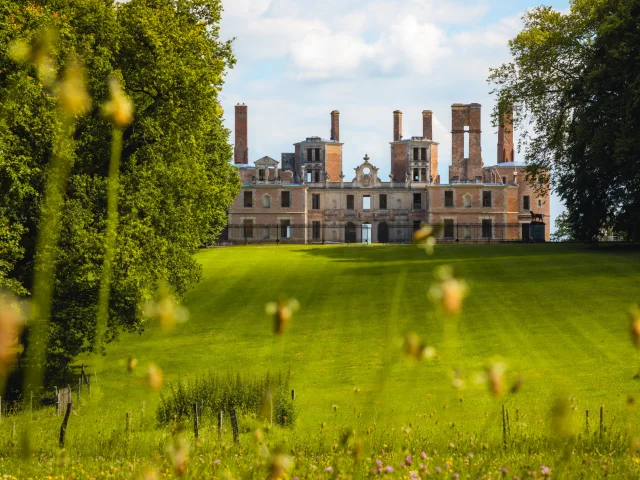
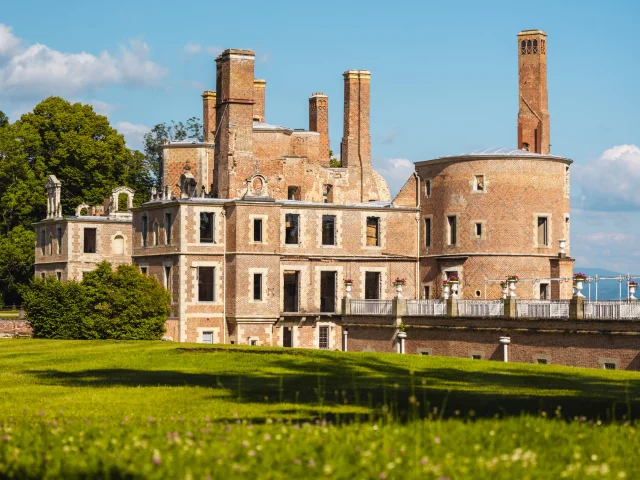
Have you always wanted to experience life in a castle? The Domaine Royal de Randan in Auvergne takes you back in time to the middle of the 19th century. Immerse yourself in the daily life of one of Europe’s greatest fortunes of the time: the Orléans family, who lived in this château from 1821 and restored it entirely. Before it was ravaged by fire in 1925, the splendour of the premises was widely renowned. Neo-classical chapel, orangery inspired by Versailles, gardens with multiple influences…

Today, you can explore the remains of the château, between Riom and Vichy, and visit its chapel, whose superb stained glass windows have been completely restored. You also have access to the impressive kitchens of the d’Orléans family, topped by an immense roof terrace that forms a veritable promenade between the château and the chapel.

 A unique collection in the heart of Auvergne

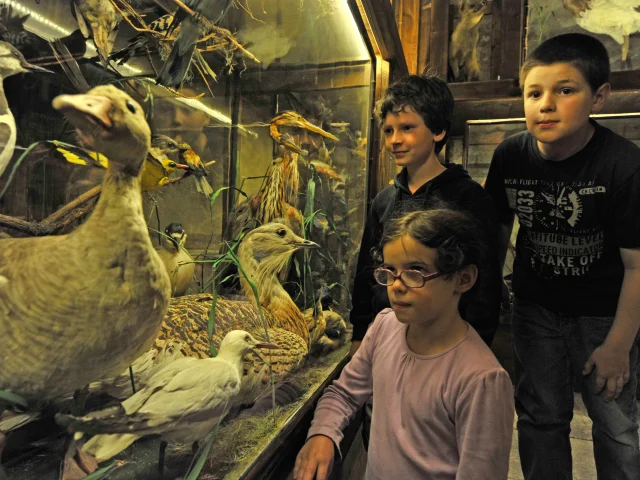
Randan’s other treasure is its Hunting Museum. The Domaine Royal de Randan invites you to discover the life of Ferdinand d’Orléans.
A keen hunter and traveller, he brought back 450 animals from his expeditions around the world.

Did you know? Every year, the Friends of the Domaine Royal de Randan association organises its Randanplants exhibition to celebrate the opening of the estate. Many other events are also organised in this prestigious green setting. Find out about all the activities and events on offer at this not-to-be-missed site.

Quite a story!  Immerse yourself in the history of Château d'Effiat

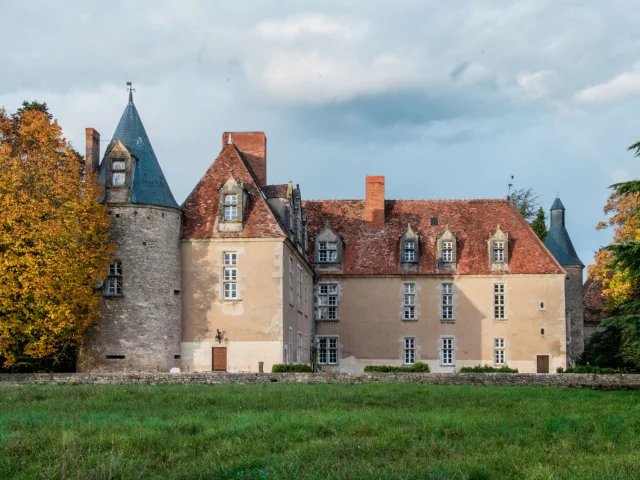
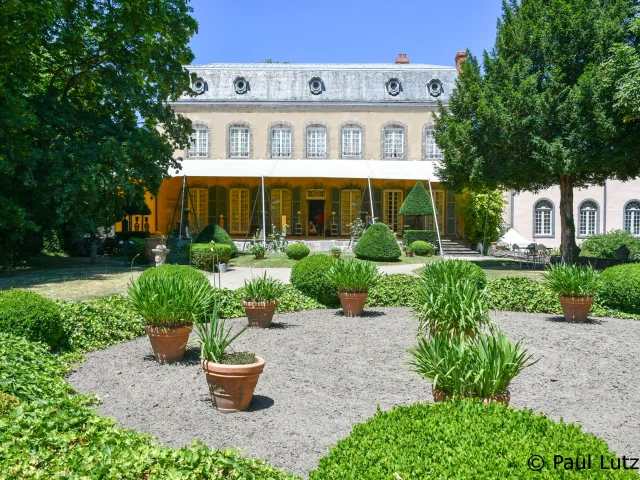
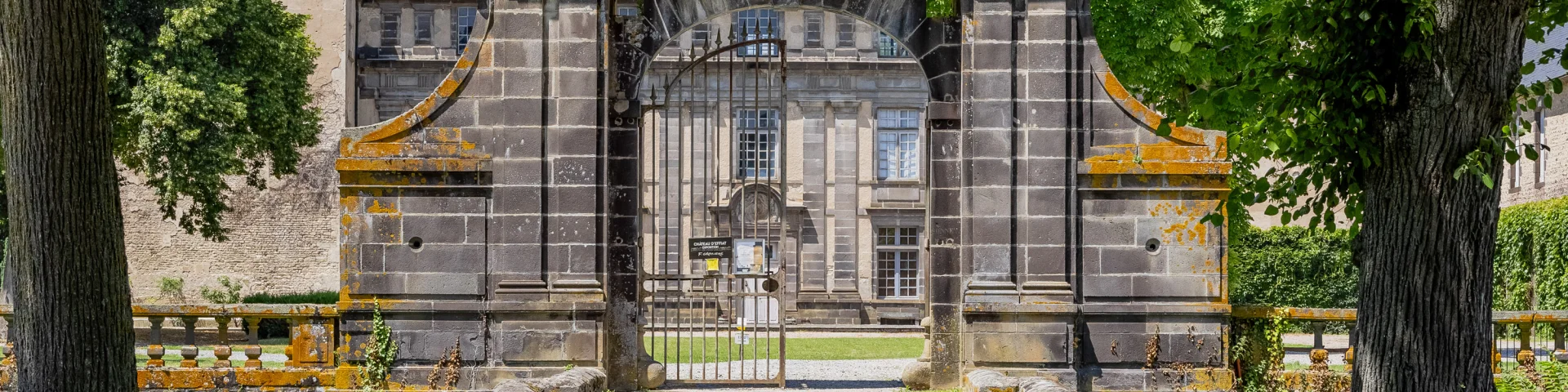
Do you have a preference for the 17th century? Not far from Aigueperse, your steps will lead you straight to the Château d’Effiat, home of Marshal Antoine Coiffier-Ruzé, friend of Richelieu and adviser to Louis XIII.

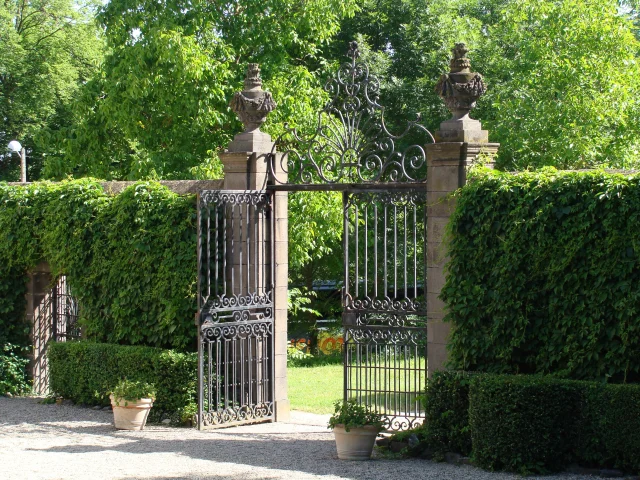
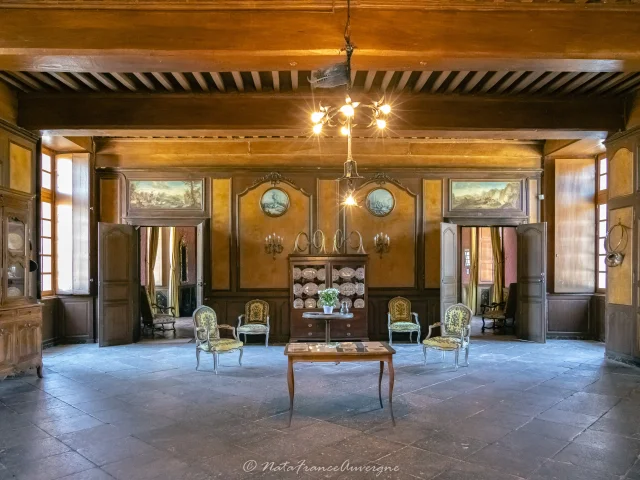
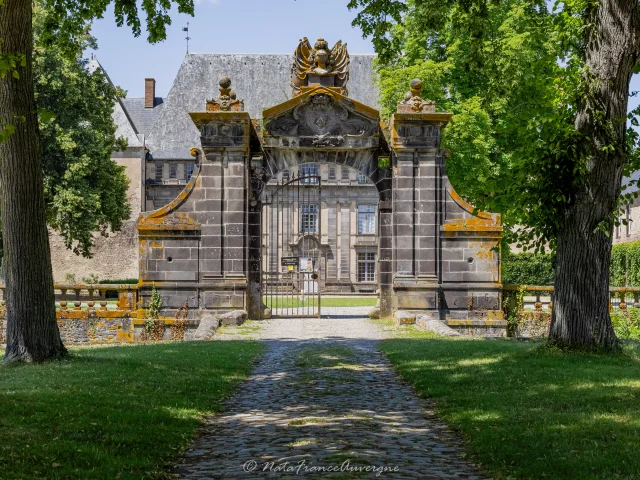
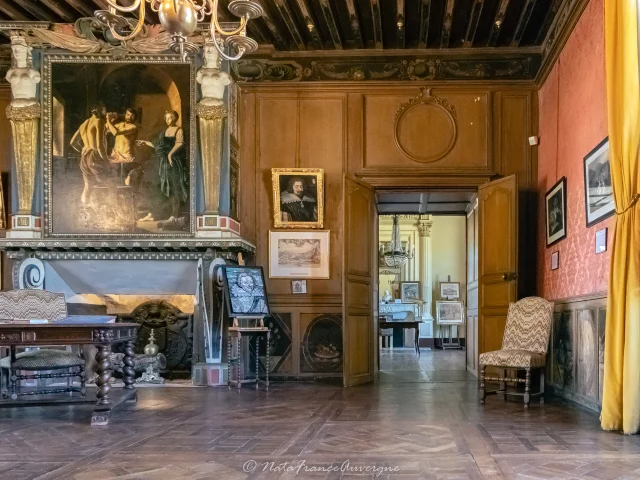
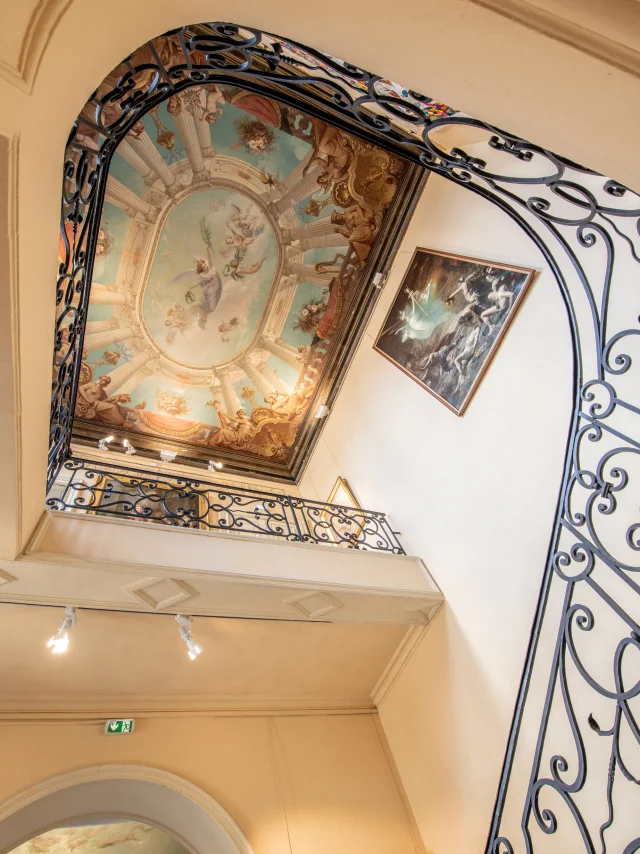
Cross the château’s drawbridge, push open its imposing gates built of Volvic stone and enter the main courtyard. You can then visit the exceptional residence of the Maréchal d’Effiat and its magnificent 17th and 18th century decor. Furniture, painted woodwork in the Italian Renaissance style, frescoes, French ceilings, parchments signed by Louis XIII, a painting by Le Nain… You can also discover the life of the Marquis de Cinq-Mars, son of the first master of the house, through superb stained glass windows from the Romantic period.

 In the footsteps of General Desaix at the Château d'Effiat

Behind this château in Auvergne, stroll through its 120 hectares of gardens designed by André Mollet, Le Nôtre’s godfather. Along the way, don’t forget to admire the remarkable nymphaeum in the château grounds.

During the Ancien Régime, the château was home to theÉcole Royale Militaire d’Effiat. One of its most famous pupils was General Desaix. He fought alongside Napoleon Bonaparte during the Revolution! If you want to find out more about the life of this general from Auvergne, the Musée de l’École royale militaire d’Effiat is the place to go.

The French way!  Make a diversion to the delightful Château de Denone

Continue your walk… Right next to Château d’Effiat is another jewel of Auvergne history: the delightful little Château de Denone, surrounded by a moat and charming gardens. Built by Charles de Marillac in the mid-sixteenth century, its history was later closely linked to the Maréchal d’Effiat. In 1629, he bought the castle and invited his friend Richelieu to stay there. The room in which he stayed is open to visitors. With its Italian-style painted ceilings and four-poster bed, welcome to the daily life of the nobility in the 17th century!

Let yourself be charmed by the three medieval towers of this Renaissance-style château near Volvic, then take a stroll through its two formal gardens

Mercier madness  Discover Château de Portabéraud

Head for Mozac to discover the Château de Portabéraud, a veritable “Folie” from the Age of Enlightenment. At that time, castles no longer had the purely defensive vocation that had originally been their hallmark. That’s why the owner, Gabriel Mercier, the town’s first mayor in 1790, decided to turn it into a house of charm and pleasure, known as the “Folie Mercier”. But what kind of “follies” are these? To find out, open the gates of the Château de Portabéraud and wander through its rural gardens.

Throughout the summer, treasure hunts for all the family are also organised in the gardens of this Auvergne château steeped in history. So get out there and have fun learning!

An invitation to daydream

The atmosphere here is one of reverie and carefree fun. Inside the château, admire the artistic madness of the period and soak up the festive atmosphere.

Auvergne castle!  Château de Tournoël: did you say "fortified castle"?

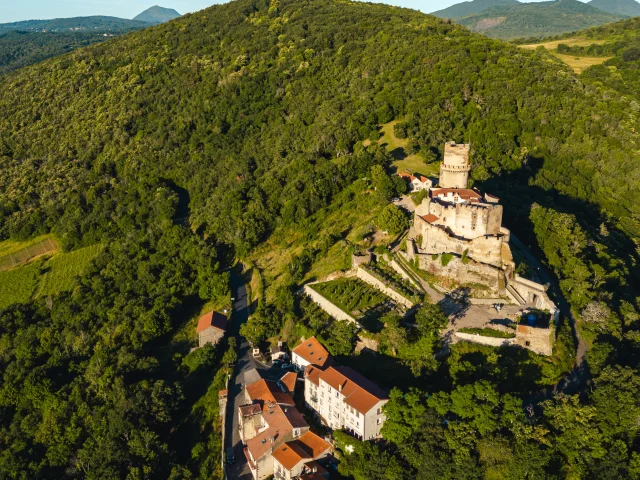
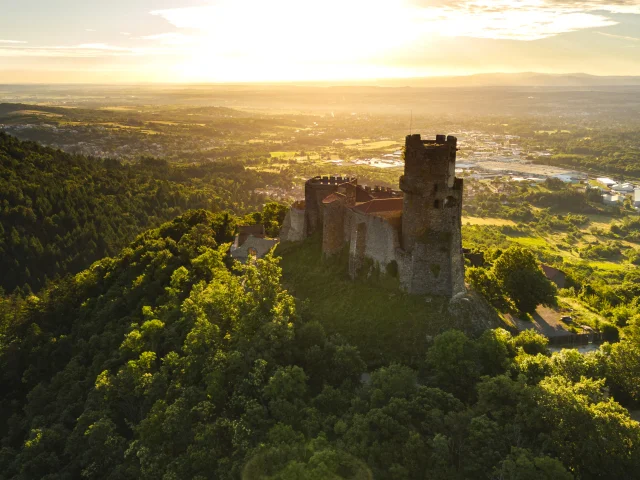
In the 12th and 13th centuries, the hills were adorned with fortified castles. Their purpose was to defend seigneurial lands. High towers, dungeons and walkways were built to protect them. Have fun finding them at the Château de Tournoël in Volvic and become the lord of the manor during a summer visit. You’ll know all about the history and quarrels of the great families of Auvergne.

Tournoël castle is located in Volvic, on a rocky outcrop at an altitude of 594 metres, offering a superb panoramic view of the Limagne plain and the Monts du Forez.

Heritage Outstanding churches in Terra Volcana

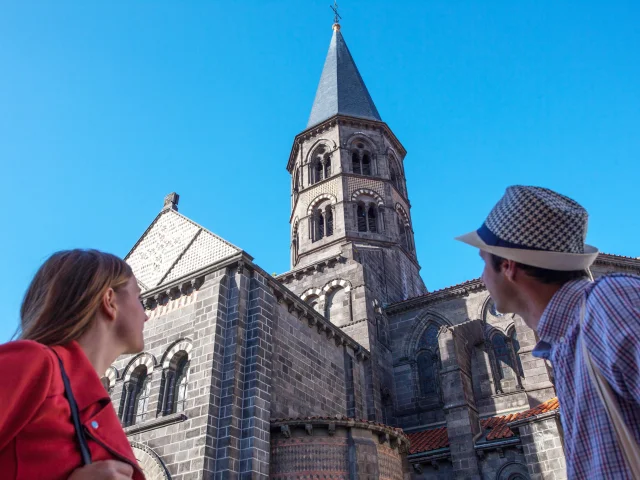
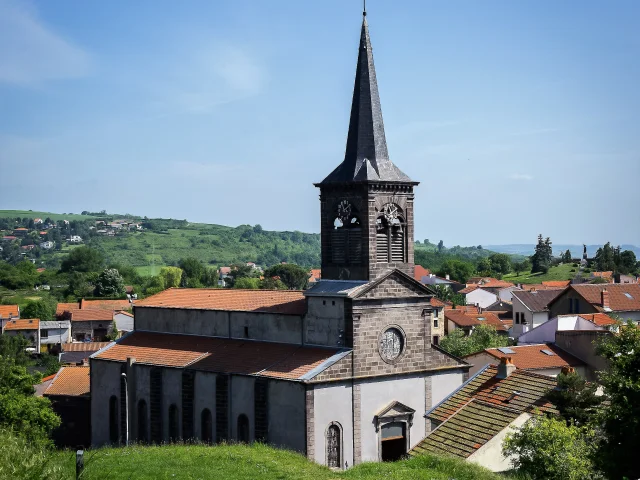
In the heart of the Auvergne region, Terra Volcana is bursting with architectural and artistic treasures. Among them, a number of churches stand out for their history, style and exceptional works of art.

Châtel-Guyon, Riom and the surrounding area offer visitors a chance to immerse themselves in Auvergne’s religious heritage.

Jewels of Riom  Saint-Amable Basilica in Riom: a building with many influences

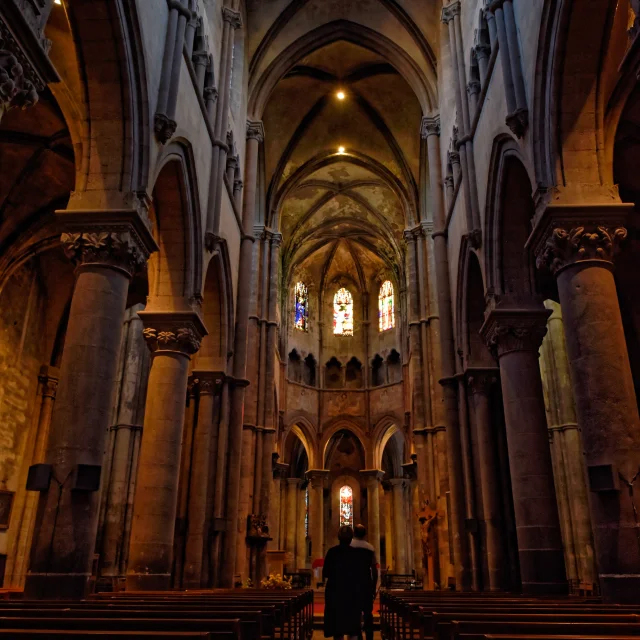
The Basilica of Saint-Amable in Riom is the largest religious building in Auvergne after Clermont-Ferrand Cathedral. Built in the 5th century by the Riom priest Amable, the church has been enlarged and transformed over the centuries. Construction began in the 12th century with the nave, followed by the choir in the 13th century, in a late Romanesque and classical Gothic style.

The church is dedicated to Saint Amable, whose relics were transferred here after his death in around 475, attracting many pilgrims and helping the building to flourish. Today, the basilica is an active place of worship and a strong symbol of the town of Riom.

Make way for Gothic!  Church of Notre-Dame du Marthuret: a jewel of the Southern Gothic style

Notre-Dame du Marthuret church, also in Riom, is a remarkable example ofsouthern Gothic architecture. Built in the 14th century to replace a chapel destroyed by fire, it features a single nave lined with chapels, typical of the Languedoc Gothic style.

The name “Marthuret” comes from the Occitan “marturet”, meaning cemetery or memorial, indicating the presence of an ancient cemetery on this site. Listed as a historic monument since 1930, the church is a living testimony to the religious and architectural history of the region.

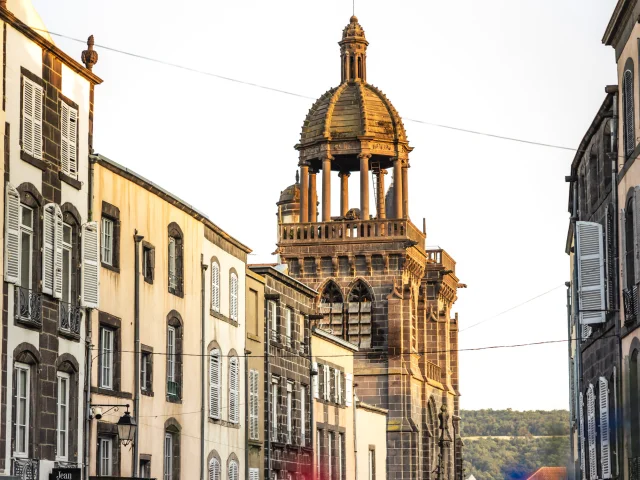
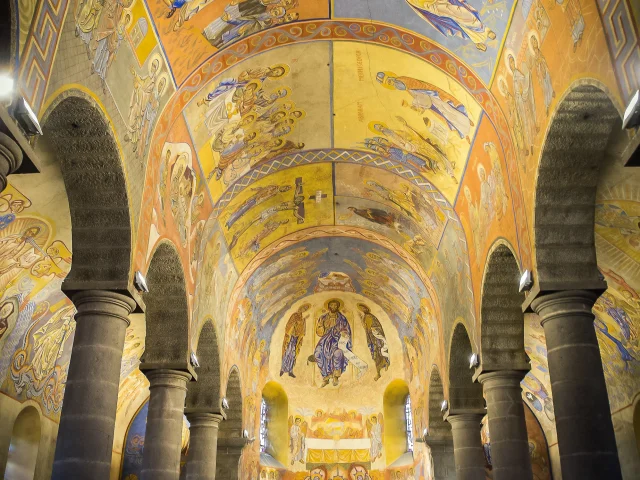
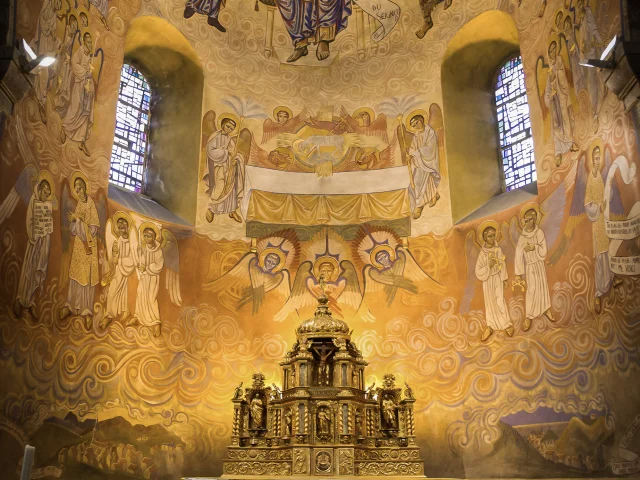
A work of art  Church of Sainte-Anne in Châtel-Guyon, remarkable frescoes

Sainte-Anne church in Châtel-Guyon is a masterpiece of modern sacred art. Built in the 1950s, it is famous for the monumental frescoes created by the artist Nicolaï Greschny. In just two months, the artist covered the 900 m² of vaults and walls of the church with biblical scenes inspired by the Old and New Testaments. The frescoes illustrate episodes such as the Creation and the Apocalypse, combining biblical figures and local inhabitants, sometimes with a touch of humour.

This masterpiece attracts many visitors and pilgrims every year, fascinated by the richness and uniqueness of these paintings. Guided tours are available to discover the secrets behind this exceptional work.

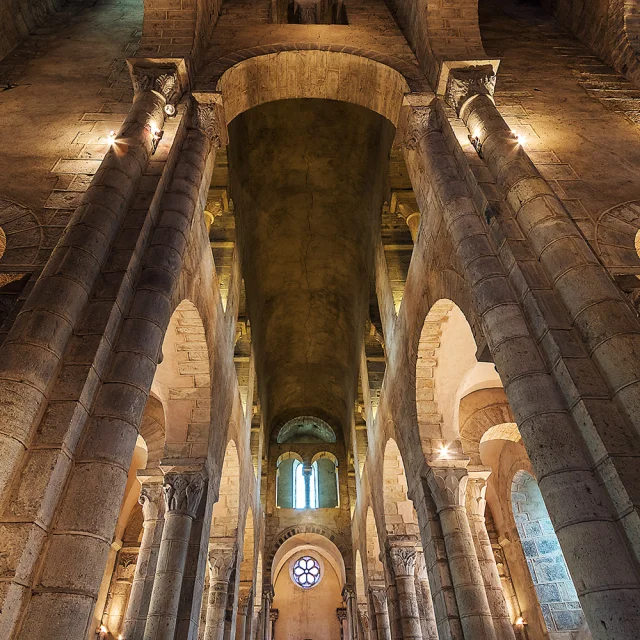
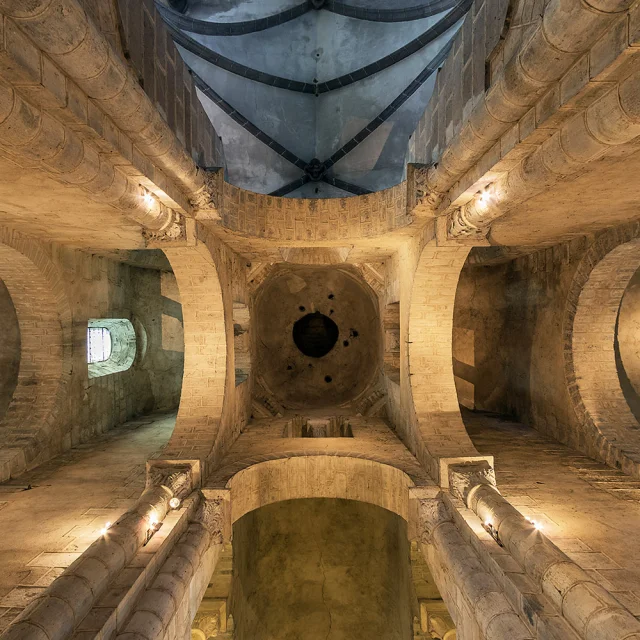
Marsh cathedral  Church of Saint-Victor and Sainte-Couronne in Ennezat: a Romanesque jewel in the heart of the Limagne region

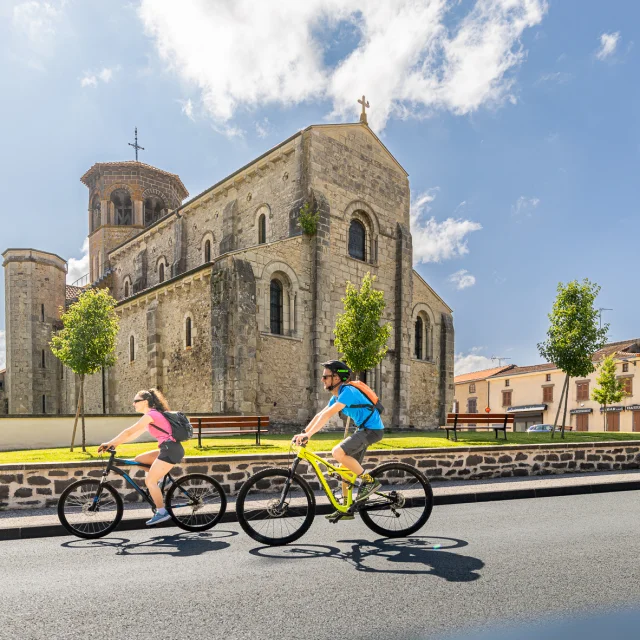
Located in Ennezat, around 9 km east of Riom, the church of Saint-Victor and Sainte-Couronne is a former collegiate church founded in 1060. It is sometimes nicknamed the “cathedral of the marshes” because of its central position in a formerly marshy region.

Inside, the church is decorated with historiated capitals depicting biblical scenes and geometric motifs inspired by book illumination. The sculpted decoration evolves from the westwork to the choir, testifying to a progression in the mastery of sculpture. Two 15th-century frescoes, listed as historic monuments, adorn the choir: the Last Judgement (1405) and the Dictation of the Three Dead and the Three Alive (1420), painted in wax, an unusual technique but one of great pictorial quality.

Listed as a historic monument since 1840, the church of Saint-Victor and Sainte-Couronne is open to visitors. Guided tours are available in season and all year round by appointment for groups, enabling visitors to discover this exceptional heritage.

And even more!  Do you love religious heritage? Check out these local nuggets

Mozac Abbey:

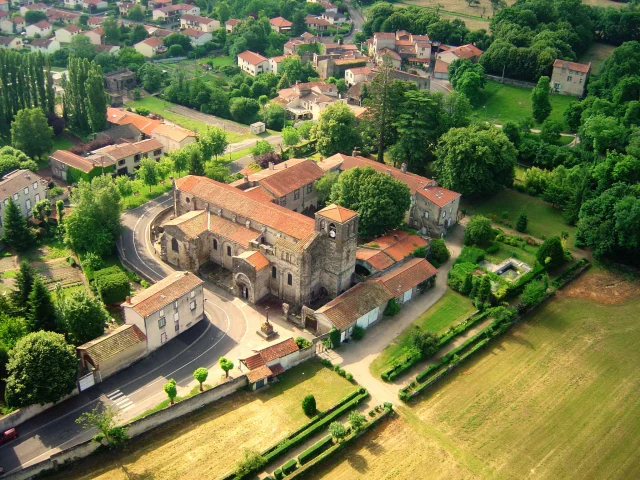
The Saint-Pierre de Mozac abbey church is a former Cluniac monastery known for its 47 historiated Romanesque capitals, considered to be among the most remarkable in Auvergne.

Church of Thuret:

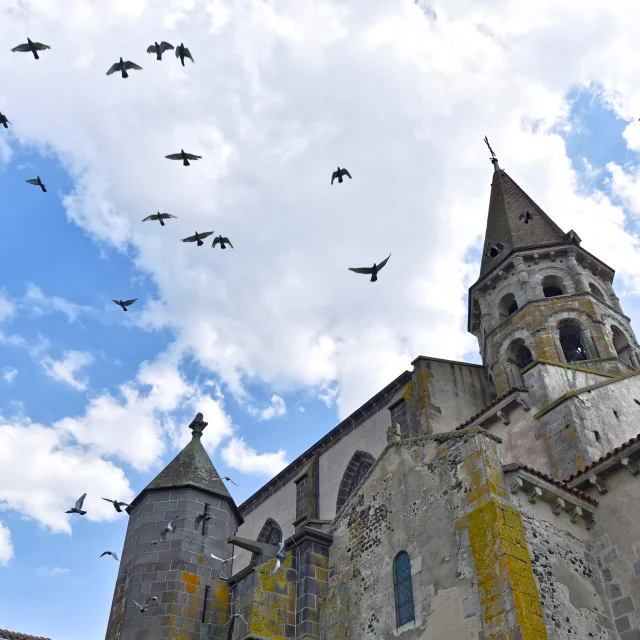
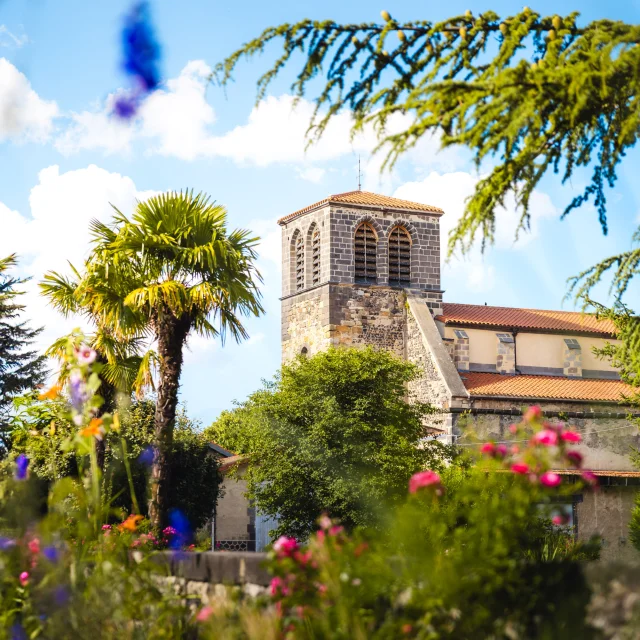
The church of Saint-Martin de Thuret, built in the XIIᵉ century, features a series of historiated Romanesque capitals typical of regional Romanesque art. Its bell tower, rebuilt after the Revolution, is made of Volvic stone, a material emblematic of the region.

Church of Aigueperse:

The collegiate church of Notre-Dame d’Aigueperse, built as early as the XIIIᵉ century, is one of the earliest examples of Gothic architecture in Auvergne. It preserves a Nativity painted in 1490 by Benedetto Ghirlandaio, an exceptional work in the region.